Forest fungi you can spot in the winter
A guide to spotting colourful species in the UK
Welcome, winter fungi!
Winter is often dismissed as being the gloomy months of greys and browns, but it couldn’t be further from the truth when it comes to fungi. Bright orange, deep purple, and delicate whites stand out against the muted winter palette – you might even spot some blood-red! They’re a fantastic sign of the resilience of the wildlife and signs of life when the leaves have fallen and the woodland falls quiet.
Many forest fungi thrive in damp, decaying wood, even in low temperatures. They have a symbiotic relationship with the trees around them (we call it the Wood Wide Web) and they’ve learned to grow slowly in low temperatures to conserve energy. Fungi play a huge role in the ecology of the forest as decomposers that recycle nutrients, helping to keep the forest ecosystem alive.
There are many types of forest fungi in the UK, our identification guide below will help you to name what you find.
Common fungi to find and identify during wintertime
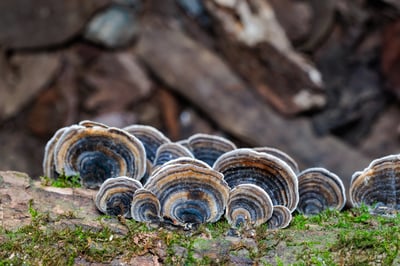
Fan-shaped, colorful rings
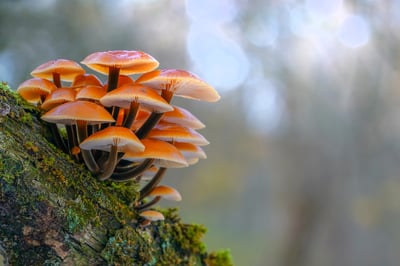
Golden-orange caps, often in clusters
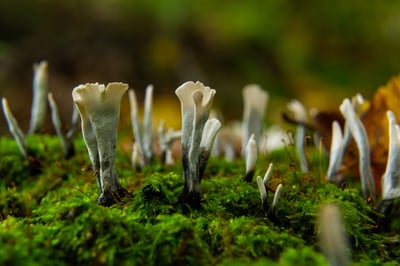
Black stems with white tips—looks like tiny candles
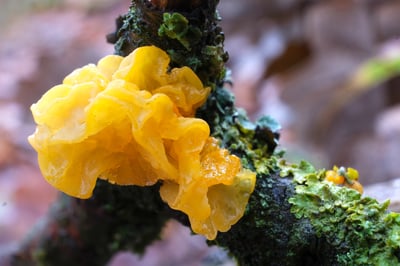
Gelatinous, often bright orange or yellow
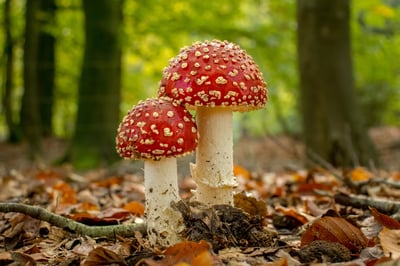
Red and white cap
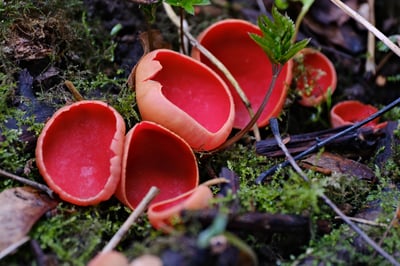
Cups like little bowls

Biofluorescent fungi

Ice forms on strands of fungi on cold, humid mornings

Some wild mushrooms are edible but remember… never eat fungi unless you’re with an expert who confirms they’re safe to eat.
Where can you find forest fungi?
Look on fallen logs, stumps, and damp leaf litter, and you could even bring a magnifying glass for tiny species – you’ll be amazed what you can spot when zoomed in!
Remember to wear waterproof boots—you’ll be exploring damp areas of the forest – and try to take photos instead of picking to preserve the ecosystem.
Nature by Night
Curious about the wildlife you can’t easily see? Why not try our Nature by Night session and uncover the world of biofluorescence? Using specialist equipment with your Forest Ranger, you’ll discover a whole new world in ultraviolet...